503-590-7574

Restorative Dentistry
Dental fillings, crowns, bridges and more.

RESTORATIVE DENTISTRY SERVICES IN BEAVERTON, OR
A healthy, confident smile can transform the way you feel every day. At Murray Scholls Family Dental, we know that dental problems—from tooth decay and injury to missing or damaged teeth—can take a toll on your oral health and self-esteem. That’s why Dr. Scott R. Walker offers expert restorative dentistry in Beaverton, helping you restore strong, functional teeth and a smile that looks and feels natural. Patients seeking care from a trusted Beaverton dentist can rely on our team for personalized restorative treatments designed to improve both comfort and confidence.
Call us at 503-590-7574 to schedule your restorative dentistry consultation and take the first step toward a healthier, more confident smile.
Why Choose Restorative Dentistry?
Your teeth work hard daily, and wear, decay, or injury can compromise their function and appearance. Restorative dentistry helps repair and replace damaged or missing teeth, restore bite function, and protect your long-term oral health. Whether you’re experiencing tooth pain, broken teeth, or gaps in your smile, our team is here to provide personalized care that meets your needs and goals.
Our Restorative Dentistry Services:
At Murray Scholls Family Dental, we offer a comprehensive range of restorative treatments in Beaverton, OR:
• Dental Composite Fillings
• Root Canal Therapy
• Dental Bridges
• Oral Surgery/Tooth Extractions
• Periodontal Treatment
Dental Composite Fillings
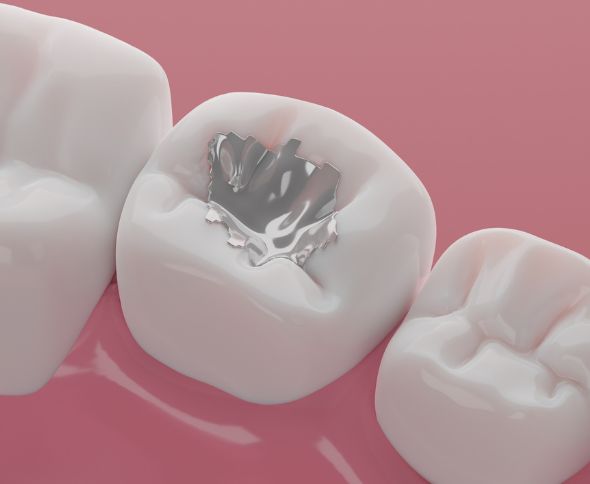
Composite fillings are similar in color and texture to natural teeth. The fillings are less noticeable and much more attractive than amalgam, or “silver,” fillings. Composite fillings bond to natural tooth structure allowing for more conservative preparations, thus maintaining more of the natural tooth.
Made of specialized composite material, these types of fillings can be customized to tooth shape and color. Since they bond to the tooth, composite fillings restore most of the original strength of the tooth and can be placed in any area of the mouth.
Root Canal Therapy
Root canal therapy is a reliable way for dentists to help you maintain a healthy smile over many years. Over one or two office visits, this procedure can save a tooth from being lost prematurely.
A root canal is necessary when a tooth’s root is damaged by decay or a traumatic injury. If it remains untreated, the tooth can eventually abscess and result in an infection that can spread to other areas.
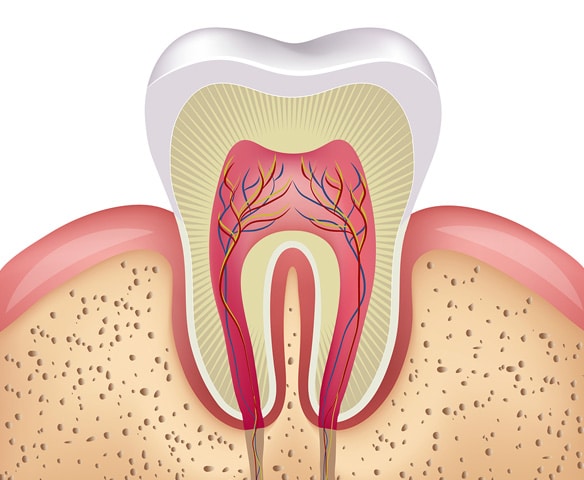
The overall purpose of a root canal is to save the damaged tooth. This is done by removing the infected pulp, treating any remaining infection, and filling the empty root canals with special medicated dental materials. Once a root canal has been completed, it is necessary to protect the tooth by placing a crown to prevent fracture or further deterioration.
Dental Crowns
Crowns are typically used on teeth that are broken, have large cavities or fillings that are so large that the remaining tooth structure is at risk of fracturing. They cover the surface of the tooth, protect teeth from breaking, and often improve the alignment of the teeth. They fit closely over the teeth, making them feel very natural. It is often difficult to tell the difference between a natural tooth and a tooth that has a crown.
Crowns generally support damaged teeth and fix functional chewing problems. Crowns are constructed from materials such as high-grade porcelain, gold, or porcelain bonded to gold.
Fitting a crown requires two visits to Murray Scholls Family Dental. Initially, our dentists will remove any decay, shape the tooth as needed, and then fit the tooth with a temporary crown.
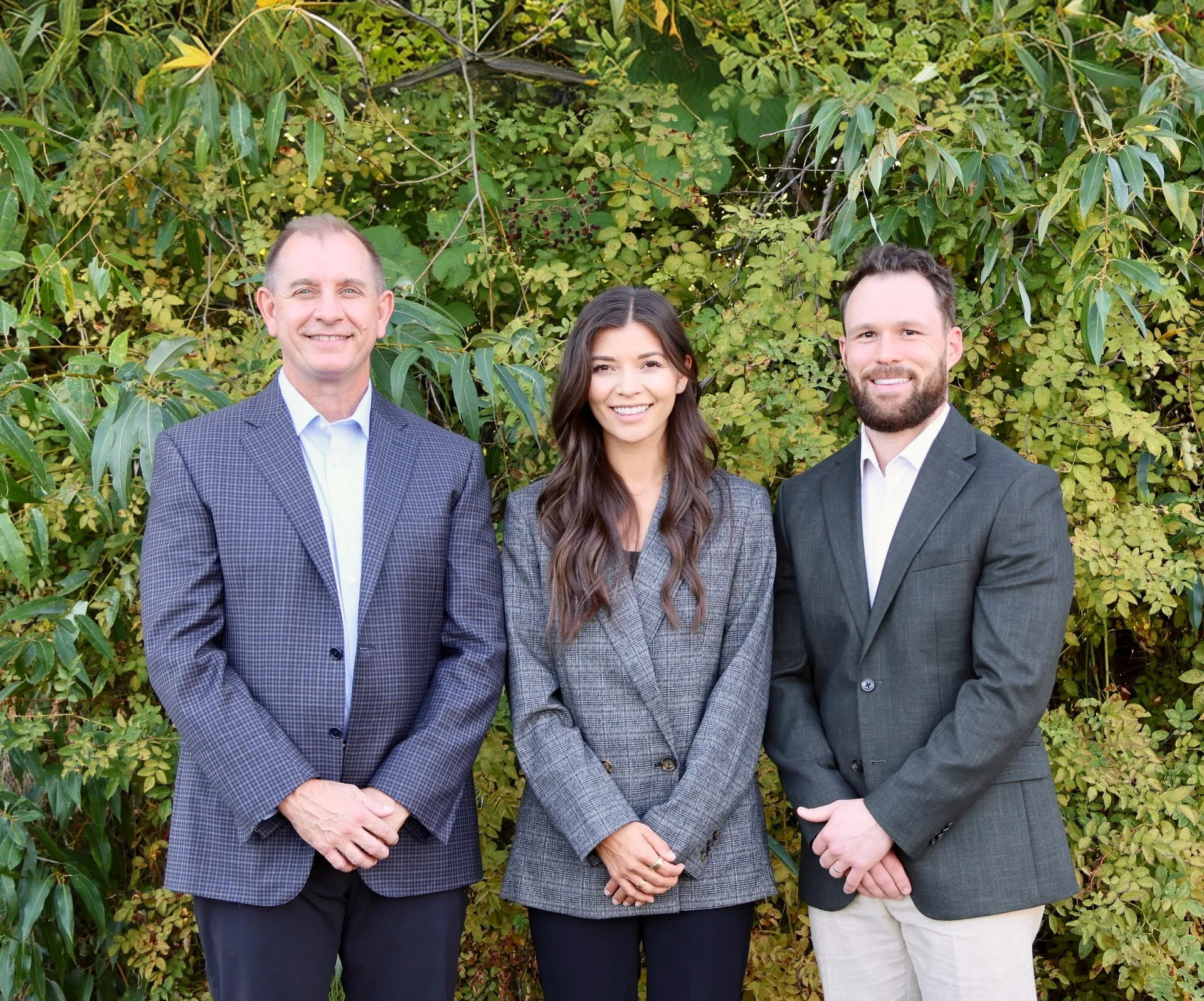
On the subsequent visit, Dr. Walker, Dr. Maxim, Dr. Hall will remove the temporary crown, clean the natural tooth structure, and place the permanent crown. The permanent crown will be cemented into place, resulting in a new beautiful looking and natural feeling tooth.
Dental Bridges
A dental bridge is a way of replacing a missing tooth or teeth. The adjacent teeth are prepared for crowns. An impression of these teeth is made and sent to a dental laboratory for the bridge to be fabricated. The missing tooth/teeth are attached to and supported by adjacent teeth. Fixed bridges are made of porcelain fused to metal (PFM) or ceramics, which closely resemble natural teeth. Since bridges can’t be taken out of your mouth, they require a commitment to daily dental hygiene habits but will last for many years.
The process of getting a bridge takes two visits to complete. On the first visit, teeth are prepared, and our dentists take an impression of the teeth. A temporary bridge will be made and placed for two weeks. During this time, the permanent bridge will be fabricated in a professional dental laboratory.
On the second visit, the temporary bridge will be removed, and the permanent bridge will be cemented into place. Dr. Walker, Dr. Maxim and Dr. Hall will then advise you on how to best take care of your teeth with the dental bridge. Flossing and brushing twice a day is required to protect your bridge and smile!
Dental Implant and Prosthetics
Dental implants are wonderful alternatives to dentures as well as an ideal way to replace individual missing teeth.
Dental implants are fixtures of titanium, which are surgically placed into your jaw bone. The implant acts as an anchor for a crown or denture to fit over. When a crown is placed on an implant, most people can’t even tell it is an implant because it is so natural in both looks and function.
After a periodontist or oral surgeon places one or more implants into a patient’s jaw, Dr. Walker, Dr. Maxim and Dr. Hall attach porcelain teeth to the implants. While dentures and removable partials are usually loose and unstable, implants provide you with dental replacements that are natural-looking and very functional.
Implant-supported restorations allow for the dentition to be restored that is both highly esthetic and natural in function. Another advantage of an implant-supported restoration is that it does not require the adjacent, healthy natural teeth to be used in restoring missing teeth. Best of all, they may last a lifetime if properly maintained. The implant acts like a natural tooth, and patients are very happy with the results.
Removable Dental Prosthesis
Dentures can replace missing teeth and can be utilized depending on your personal needs:
- Partial Dentures – A removable partial denture attaches to your natural teeth with clasps that keep them in place, completing your smile by filling out the spaces created by missing teeth. Partial dentures are constructed of replacement teeth attached to pink or gum-colored plastic bases connected by a metal framework. Your natural teeth are used as stable supports for removable partial dentures.
- Overdentures – Giving dentures more stability and a better fit, an overdenture is a type of denture that is placed over dental implants and typically “snaps” onto the implants.
The alignment of your jaw will slowly change as the bone and gum ridges shrink due to teeth extraction. Dentures will experience wear over time and will need to be replaced or realigned to maintain proper jaw alignment. Regular dental examinations are still important for the denture wearer so that the oral tissues can be checked for any changes or potential gum disease.
Oral Surgery/Tooth Extractions
Our dentists may determine with you that one of your teeth needs to be extracted, which can occur for various reasons. Some teeth are extracted because they are poorly positioned in the mouth (such as impacted teeth) in preparation for orthodontic treatment, or a tooth may be fractured beyond repair. A tooth may also be severely decayed or have advanced periodontal disease requiring extraction.
The removal of a single tooth can lead to problems involving your other teeth shifting, your ability to chew, and eventual problems with your jaw joint. To avoid these complications, Dr. Walker, Dr. Maxim and Dr. Hallwill discuss alternatives to extractions as well as the replacement of the extracted tooth.
During a tooth extraction, we will need to numb your tooth, jawbone, and surrounding gums with a local anesthetic. During the extraction process, there will be a sensation of pressure but no pain. Detailed post-operative instructions will be given after the appointment, along with any necessary medications for discomfort and infection.
Periodontal Treatment
Periodontal disease progressively destroys the gums and jaw bone that support your natural teeth. Periodontal disease by bacteria is often found in dental plaque, the yellowish film that sticks to your teeth along your gum line. Bacteria found in plaque irritate your gums, which may cause them to turn red, swell, and bleed easily. Prolonged irritation causes the gums to separate from the teeth, leading to the formation of “pockets.”
Bacteria are established in these deeper pockets, becoming increasingly difficult to remove and allowing the disease process to progress. As periodontal disease progresses, gum tissue and bone that hold teeth in place deteriorate, which can lead to tooth loss if left untreated.
Periodontal disease is best prevented by thorough daily brushing and flossing of your teeth, along with regular routine visits to see the hygienist.
Frequently Asked Questions
480+

Star

Reviews

Murray Scholls Family Dental, Dr. Walker and his staff are amazing! I switched from a different dental office awhile back and I’m hooked! The office atmosphere is very warm and friendly along with an excellent staff. Dr. Walker is very thorough and gentle as well as the kind of person that makes you feel very at ease! All of my experiences with Dr. Walker and his staff have been great! Even my kids look forward to their dental visits. I would recommend Dr. Walker and his staff to anyone!
Deb T, Beaverton, OR
Murray Scholls Family Dental has been the very best for my husband and me. From the dentist to the hygienist and everyone in-between, they are so professional, friendly and caring. We don’t even mind going to the dentist. We’ve recommended them to many of our friends over the years!
Bonnie D, Tigard, OR
We love Murray Scholls Family Dental! My kids ages 9, 7 and 5 look forward to coming to the dentist. Everyone is kind and makes sure you are very comfortable. Thanks!
Becky, Portland, OR
I can’t say enough about how pleased I am with the work Dr. Walker has done. I’ve had a number of crowns done and can’t tell the difference between them and my other teeth. I came to Dr. Walker after a negative experience at another office in town and have been happy ever since. I’m so pleased with the work I continued on with Dr. Walker even after our insurance changed.
Wayne S, Portland, OR